Argue online. Finish the argument.
Comment sections have no clock, equal time, or finish line. Debatable gives an online argument a shared question, live rebuttal, and a written verdict.
Updated August 10, 2026
To argue online productively, agree on the exact claim, give both sides the same speaking time, answer the other side directly, and end with a decision. Debatable turns that structure into a live round against a stranger, an asynchronous human round, or a clearly labeled AI practice session.
- 1 · ClaimOne question
- 2 · TimeEqual turns
- 3 · RebuttalAnswer the clash
- 4 · DecisionEnd with reasons
Why online arguments go nowhere
Most online fights are not failed debates. They never became debates. The sides answer different questions, one person posts ten times more than the other, and the thread ends only when somebody gets tired.
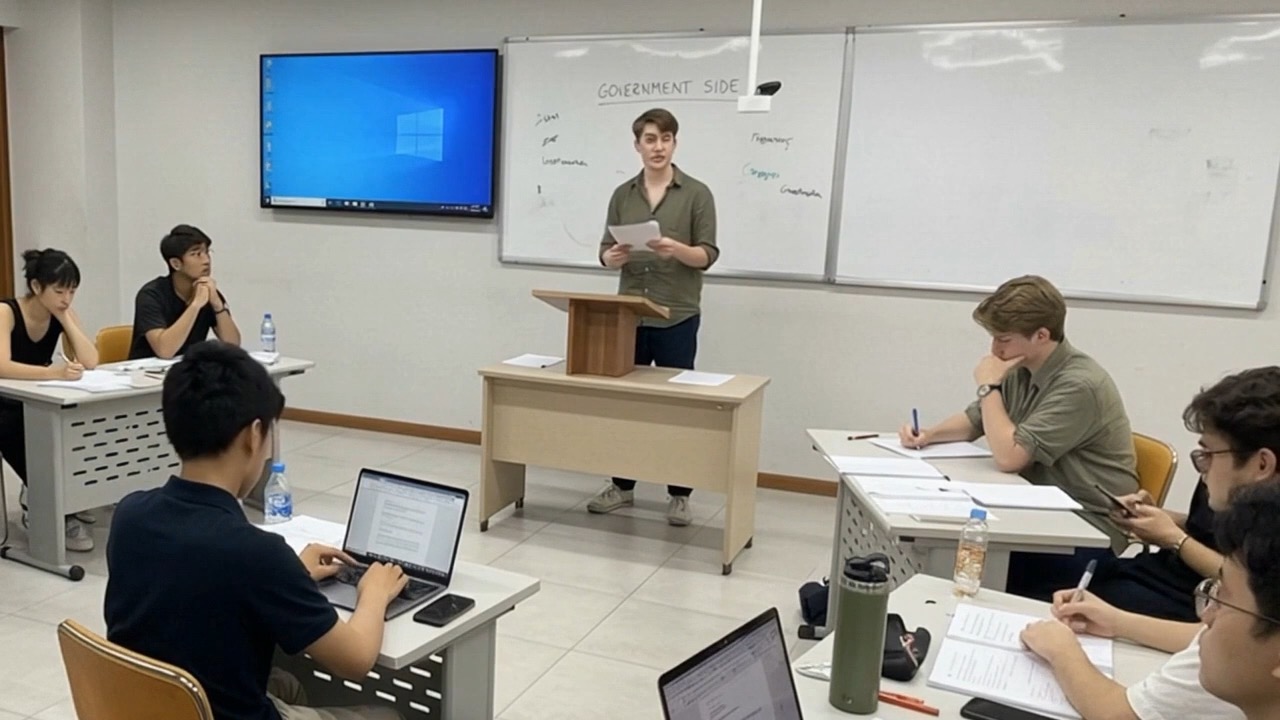
A structured round fixes all three. One motion, the same clock, direct rebuttal, and a judge who explains the decision. Heat stops working. Warrants start.
A 2021 University of Washington study of online arguments found that people valued moving difficult conversations into more socially rich, one-to-one settings, while heavy-handed interventions could make conflict worse. Good structure should focus the disagreement without taking it over.






Opinions age differently once rounds get involved. Bring one of yours.
Four ways to argue online
What the judge gives you
Every round ends with a written ballot: the winner, the reason for decision, speaker points, and one drill to run before your next round. Losing well shows you the weak warrant you have been carrying around.
The ballot names a winner and the exact reason. That reason is the lesson.
From hot take to case
An opinion becomes an argument when it grows a warrant and an impact. The claim, warrant, impact guide covers the anatomy; weighing covers why judges pick one true thing over another true thing; rebuttal covers taking apart the other side without dodging it. Ten minutes of reading, then back to the room.
The bigger picture
The bet behind Debatable: as machines take over the writing, the human skill that holds its value is reasoning out loud under pressure. Feeds train the opposite. So we build rooms where opinions get tested instead of amplified, with a judge in every one of them, which means the format scales anywhere: two strangers at midnight, a classroom in any country, a whole league. The plan is here.
Questions people ask
Where can I argue online?
Debatable gives online arguments a motion, opposite sides, equal speaking time, and a written verdict. Debate a stranger live, record an asynchronous round for a human to answer later, or practice against a clearly labeled AI opponent.
Why do online arguments usually go nowhere?
Most comment threads have no shared question, no equal speaking time, and no agreed ending. A structured round fixes those three failures with one motion, a clock for both sides, and a written judge decision.
Is there an app that debates your opinions?
Yes. The AI opponent takes the other side of any claim you bring, by voice or text, and presses the strongest objections. When you want a human, the matchmaker pairs you and the AI moves to the judge's chair.
What if my opinion is unpopular?
Unpopular is fine; undefended is the problem. A round gives an unpopular view the fairest hearing it will ever get: equal time, a neutral judge, a written reason for decision. You find out it is stronger than the room thought, or exactly where it breaks.
Do I need debate experience?
No. Every round is casual 1v1, with short speeches, plain rules, and a judge that explains itself in plain language.